Showing posts with label Indiecade. Show all posts

Tuesday, February 28, 2023

The California Problem

greetings! this is a very long post about video games and capitalism. feel free to take breaks if you need them. make sure to stick around till the end, if you can. plz enjoy. and support me on patreon if you like (and read this post on patreon here for free if you don't like orange). i have a new indie music-related podcast, by the way, in case you're interested in checking it out. anyway......

- liz

"If silicon is prone to make your dreams come true
You could probably say the same thing about nightmares too"

- from 'The Future of History' by Tropical Fuck Storm 


the 0th Indie Game Jam

almost exactly 10 years ago, i made an account on Twitter to promote a fake game called "Gloomp!"


at the risk of over-explaining a not particularly deep joke, the idea was a spoof on a lot of games that were getting attention at the time, particularly mobile games. it seemed like there was an industry-wide belief that the growth of mobile and casual games could lead to a profound shift in how the public experienced and thought about games, especially among many influential game academics and industry figures. the surprise success of mobile games like Canabalt or Spelltower by new independent developers came along in this wave of games that were reaching increasingly larger audiences, breaking out of the usual demographics of console and PC gamers. 
 
this ran concurrently to a lot of growth happening in the tech industry at the time (i.e. the arrival of the iPhone, iTunes and digital downloads), as video games often do. many people around the industry saw this new direction as a way out of the current depressing path much of the video game industry had been on. (this optimism, of course, ended up being short lived due to large mobile companies quickly consolidating and pushing the quirky indies out of the space and the sad state of preservation of software on mobile platforms.)

whenever any space experiences a new wave of financial success and public scrutiny unlike anything else that came before it, it leads to a lot of industry hype and speculation. the shift from 2D to 3D development as the norm in the mid-90's was a massive sea change that transformed the video game industry in profound ways. the onset of the internet and its increasingly large role in society and culture of the last thirty years is one of the most consequential events to happen in the past century. drastic shifts in technology that alter modes of being are not new. the endless supply of new products that dramatically change how we construct ourselves around them is one of the primary features of capitalism.

all of this is to say, i wasn't particularly sold on this new wave of excitement towards mobile and casual games at the time. to me what felt particularly strange was the intensity of the rhetoric around a certain subset of games, especially when placed in tandem with how tiny and narrowly focused the insights it felt like you could glean from each of these things as experiences was. mobile games like Canabalt were fun byte-sized little action stories that brought back some of the artistry of vintage coin-op arcade games. 

social games that involved more human interaction like JS Joust could get crowds of people interacting with each other in ways often lacking in a space that mostly involves being sedentary for long periods of time (though the critique re: JS Joust was often that you could easily win if you were bigger/had longer arms). there are events focused on physical play like Come Out And Play that still attract a lot of attention and i can imagine will continue to do so as more people lack real-life communal spaces to gather together in. though the kinds of games they feature have never escaped being performed in very specific events and settings. some of which, like in school gym class or mandated corporate team-building exercises, feel pretty far from some of the grandiose theorizing about transforming society through play.

the main point was that these weren't new things at all. they were heavily informed by a fascination with the often underappreciated artistry of mechanically simple 80's video games and the hippie-infused New Games movement of the 70's. twenty- and thirty-year nostalgia cycles dominate so much cultural movement and are not a new phenomenon, of course. but this movement was deeply infused with an increasingly powerful streak of hyper-individualism pushed by the tech industry, which gave all of the rhetoric a special intensity. ever since the 90's, an increasing amount of power and money was being offloaded from other parts of society and onto tech industry entrepreneurs drowning in piles of cash. this only became more prevalent in wake of the Great Recession, which the tech industry seemed almost unscathed by. if you were in any space even vaguely tangential to technology at the time (which game development certainly was), it was completely impossible to escape the overwhelming predominance and full-throated embrace of this rhetoric. the tech industry had been fully empowered by the world to enact its beliefs on a massive scale.

allow me here to quote at length from a very influential (and prescient) critical piece about the tech industry by Richard Barbrook and Andy Cameron from 1995 called "The Californian Ideology" (emphasis in bold is mine):

"the Californian ideology has emerged from this unexpected collision of right-wing neo-liberalism, counter- culture radicalism and technological determinism - a hybrid ideology with all its ambiguities and contradictions intact. These contradictions are most pronounced in the opposing visions of the future which it holds simultaneously.

On the one side, the anti-corporate purity of the New Left has been preserved by the advocates of the 'virtual community'... Community activists will increasingly use hypermedia to replace corporate capitalism and big government with a hi-tech 'gift economy' in which information is freely exchanged between participants.... Despite the frenzied commercial and political involvement in building the 'information superhighway', direct democracy within the electronic agora will inevitably triumph over its corporate and bureaucratic enemies.

On the other hand, other West Coast ideologues have embraced the laissez faire ideology of their erstwhile conservative enemy...

In this version of the Californian Ideology, each member of the 'virtual class' is promised the opportunity to become a successful hi-tech entrepreneur. Information technologies, so the argument goes, empower the individual, enhance personal freedom, and radically reduce the power of the nation-state. Existing social, political and legal power structures will wither away to be replaced by unfettered interactions between autonomous individuals and their software.... The free market is the sole mechanism capable of building the future and ensuring a full flowering of individual liberty within the electronic circuits of Jeffersonian cyberspace."

the piece then goes on to talk about how much Californian ideology came out of a massive amount of public money and government influence spent towards developing the internet. these tools were, of course, greatly dependent on labor exploitation and the suffering of others to build and maintain the technology necessary for this. but it set the stage for the all-encompassing fantasy of a new virtual frontier; a frontier that goes back to the original American founding myth of the frontier settlers of the west.

and that rhetoric of "the new frontier" and "the wild west" was inescapable at the time in the indie game development sphere. these were not the type of people who were particularly happy or even very conscious of being implicated in critiques of Californian Ideology. in a podcast episode i did in 2021 about this period of time in the space with games researcher (and friend) Alex Ross, he mentioned the influence of famous counter-culture huckster Stewart Brand, his Whole Earth Catalog, and the idea of the "cowboy nomad" on thoughts expressed by prominent indie game figures like Jason Rohrer or Jenova Chen at the time. they often spoke in romantic ways which conflated the idea of personal success with larger social success. these were developers envisioning themselves as wandering empowered tool-users, or anarchist squatters roaming the countryside and creating a space for everyone around to inhabit through their own personal achievement and self-belief. they were, to be fair, by far not the only people in the game industry who bought into these sorts of notions. this tweet from last year by game industry legend John Carmack is a perfect embodiment of this way of thinking for me:


so anyway, if you played Braid for the first time in 2009 thanks to a friend's recommendation and your interest was piqued by its novel use of time-manipulation, you might start looking for conference talks on game design to follow during this time period. and you might quickly notice that there was a lot of talk on short experimental games like Rod Humble's The Marriage or Jason Rohrer's Passage at the time. the dominant discourse around these works often revolved around their ability to demonstrate how you, as a designer, can Do Things With Video Games. their key insights were how they stripped games to their bare essential dynamics and expressed something deeper underneath. 

both of the above games were often tearfully presented by other developers at conferences as making meaningful and profound statements that changed the way they thought about video games at a fundamental level. they appeared like lightning rods for many game industry people that sent them into a tizzy about how they constructed their larger life and work. these games signaled that video games had arrived, that they mattered now, and that they were shedding themselves of their sordid past as violent shooter games and mere objects of "fun".

longtime game designer and Game Developers Conference founder Chris Crawford, while talking to Rohrer for the documentary Us and the Game Industry (which my aforementioned game researcher friend Alex Ross likened to "a Scientology recruitment video for the indie games industry" and you can currently watch for free on Roku afaik), said something related to this that i think about a lot:  

"game developers are very defensive about the sordid reputation they have. ...one reason is that games should form character, and build your body, and so forth - or, at least, they should be mentally like Chess: that's a respectable game! and video games don't have any of those traits. they're just fun, and nothing else. and there is a puritanical streak in American culture that says fun without any redeeming value is sordid"

i can only imagine this desire to escape the sordid reputation of games fed the aura of excitement that hovered around influential industry people so visibly buzzing about an extremely spare prototype involving growing and shrinking squares, or a tiny 8-bit walking simulator. i can't imagine this happening at any other point in the short history of video games. the mainstream industry was awash in the time with gritty military-themed first person shooters and bloated open-world games. development cycles of AAA games had become increasingly more expensive, high stakes, and stifling of innovation. 

the late 00's was also when i checked out of video games in general as a casual consumer, because it just felt to me like so many games were becoming more samey and bland in their design and going in the wrong direction. unbeknownst to me at the time, a growing crowd of influential people in the video game industry were vocally advocating for new forms of innovation to break the industry out of its stupor of derivativity. and parallel to that, the idea of the self-styled entrepreneur was growing in power in larger culture. so the tech industry was increasingly in an excellent place to help empower some new individuals to "disrupt" the space with innovation.

in general, in broader culture it felt like games wanted more and more to be taken seriously as consequential art, but also didn't want to have the same scrutiny level applied to them as other art.

all of this applied even more to the indie space, which was growing in prominence and influence thanks to the breakout success of games like Braid and the sudden monumental juggernaut of Minecraft. to anyone who gleefully espoused the value of some formative indie works, you likely never were allowed to stop for very long to interrogate what questions the themes of games like Passage or The Marriage presented, and what they may say about troubling dynamics in gendered relationships. they were more just signifiers that represented that the possibility of deeper expression was there, and should be taken seriously and given more scrutiny. but the moment you applied more scrutiny and started to ask questions about the themes in the work, that was often handwoven off as irrelevant to the point at hand (which was, again, that Videogames Have Arrived). 

this always begged the question for me (a question which remains unanswered): why is the vessel for this new wave of serious important experimental art games that are poised to transform the industry seemingly all about failing or dysfunctional marriages? the unintentionally funny jankfest Façade from around the same period, co-authored by future military contractor Andrew Stern, was another notable example. and what's the deal with the oddly large number of games featuring dead wives, for that matter?

basically - even if you were willing to ignore how much this space was soaked thru with romanticized hyper-libertarian beliefs about cowboy nomads empowered by the tech industry, it was hard to ignore the implications of the themes that kept popping up within a lot of creative works. Rohrer's game The Castle Doctrine (based of a famous right-wing ideology about 'standing your ground'/property defense) was a particularly notorious example that Rohrer doubled down on in a bizarre post about self-defense and that defense was backed up by many in the space - which felt especially egregious coming in the wake of public outcry around the Trayvon Martin murder. and, much less egregiously, other notable indie games like Dear Esther, embodied the dead wife/death of marriage trope so common to art games at that point in a commercially-facing, mainstream accessible way. my favorite response to this whole odd phenomenon is the satirical game "The Virtual Museum of Dead-Wifery" by Lilith and Zoë Sparks, by the way.

but, for me, this underlined the point that these games perhaps weren't, in a sense, actually about what they were about. they were containers signifying the capability of larger meaning that could theoretically exist. they were meaning machines capable of eliciting empathy (a rhetoric that got even more intense later on in the 2010's around VR), but exactly how that empathy manifested itself was a placeholder. if games were to have a greater purpose in society, they simply must be able to do this. that capability of evoking empathy and containing larger meaning mattered far more than what specifically was being expressed.

so in that case, even though i don't think most people either got the joke or thought it was as funny as me (shout-out to Kepa from Rocketcat Games for getting on the train though), my fake game Gloomp! was a stand-in, for me, which represented the ideal form of art within the commercial indie game space of the time: an entity that is both transformative but also empty, without any particular meaning assigned to it. a squishy container for the over-romanticized ideal of transformative or meaningful 'play' that was poised to take over the space around it, but didn't correspond to anything in particular or make a statement about anything in particular. an object that signified importance in some kind of vague, market-friendly way, by virtue of simply being in the space at that particular time and place. a response to games like flOw that were so focused on the act of expression without having much of any interest in what, exactly, was being expressed. a perfect commodity, basically.

like most things, "Gloomp!" was an inconsequential one-off joke that was quickly abandoned. the era of games it's meant to skewer is, more or less, over by now. the joke's not very funny anymore, if it ever was. Ian Bogost's "Cow Clicker" sort of did another version of that anyway. 

networks of wealthy indie and ex-industry figures who popped up in the wake of the indie games boom i.e. The Indie Fund which chose projects and entrepreneurial new personalities to elevate based via whispery connections of private mailing lists and secret forums and reflected the interests of influential people in the space, were once incredibly important. the tech industry broadly never really got behind funding the game industry outside of whenever it needed to drum up a wave of hype around some new tech i.e. in the big VR push of the mid to late 2010's or the great NFT and AI debacles of the past couple years. so the funding was usually left towards other sources.

so now things in the space have given way to one increasingly dominated by indie publishers and acquisitions by larger companies, which are both basically replicating what happened to the game industry in the 90's. the same sort of creativity-stifling forces all those early indies were fighting against in the 00's are back in a different form. and there has been an increasing amount of discontent with the shoddy deals many of indie publishers are reportedly giving indie developers as well. so this totalizing fantasy of transforming a space forever thru 'Meaningful Play' may still exist in places like games academia, but in the commercial industry they have mostly given away to the hardened faux-wisdom of what i often semi-disparagingly call "The Industry Realist" (a term which i think i borrowed from Emilie Reed).

 

Tuesday, October 14, 2014

Embracing the New Flesh

(this is a heavily revised version of a talk given in the "Influences" session at Indiecade 2014. spoiler alert for the plot of Videodrome)


there's a tendency that i keep sensing popping its head up indie games that i call the "boy genius syndrome". it's about being the first to carve out and colonize a new idea space in the digital world. it often takes the form of being really hung up on a particular type of easy-to-convey technological innovation. it's about willingly reducing your ideas to one easily-sellable hook in order to get further and brand yourself as an innovator. it's, of course, an extension of larger patriarchal values - but in this case specifically tech culture's values.

i think this works particularly well because the standards are still so collectively low as far as interesting or unconventional approaches go towards games, that anything that stands out as at all strong in the field gets amplified by those participating on the more progressive end of the culture as this new great thing - BUT ONLY as long as it's relatively easy to communicate what it's all about. then, simply knowing about it and being associated with it becomes a form cultural currency that also increases your status in the culture. the boy genius projects an image of power and knowledge that makes him attractive to be around.

maybe not so surprisingly, this means a harder path for a lot of games that are aiming for more nuanced, or harder to interpret, or convey experiences. this expression, and these fights people in the progressive game sphere are waging against a dominant culture defined by intense conservatism become seen as a novelty, almost a sideshow. work is made to embody one idea only. our expression is always being re-framed by outside cultural forces that are trying to make sense of our work and file it into an easily understandable category. articles about games, in the end, still garner much less traffic and general interest than other cultural phenomena. serious discussion that happens in the videogame sphere is largely disregarded as niche and unimportant in broader cultural conversations - much to the frustration, by the way, of those of us who do see games' ubiquity and value. and so, in the absence of larger serious cultural attention, the boy genius rules as king.

the boy genius thrives from identification (either feigned or genuine) with the norm of videogames as lower culture and sees himself as selling back the most beautiful parts of it to his new, tech-savvy world. the boy genius does not challenge the idea that games are overwhelmingly a culture built from corporate ideology that has manufactured and heavily pushed this idea of "gamer" and "game culture" as active ways of entrenching themselves in the market. the boy genius merely tries to carve out a space in this market, to get another piece of that pie. the boy genius may try to resurrect what are now considered anomalies of the medium's past that don't fit this gamer culture, particularly old PC games or physical games, but only in order to "rediscover" and rebrand them for the present culture. this, in itself, is not bad - except that in the end, the boy genius does not seek to challenge, but merely seeks ways to repeat to us what we already know in different, newer forms.


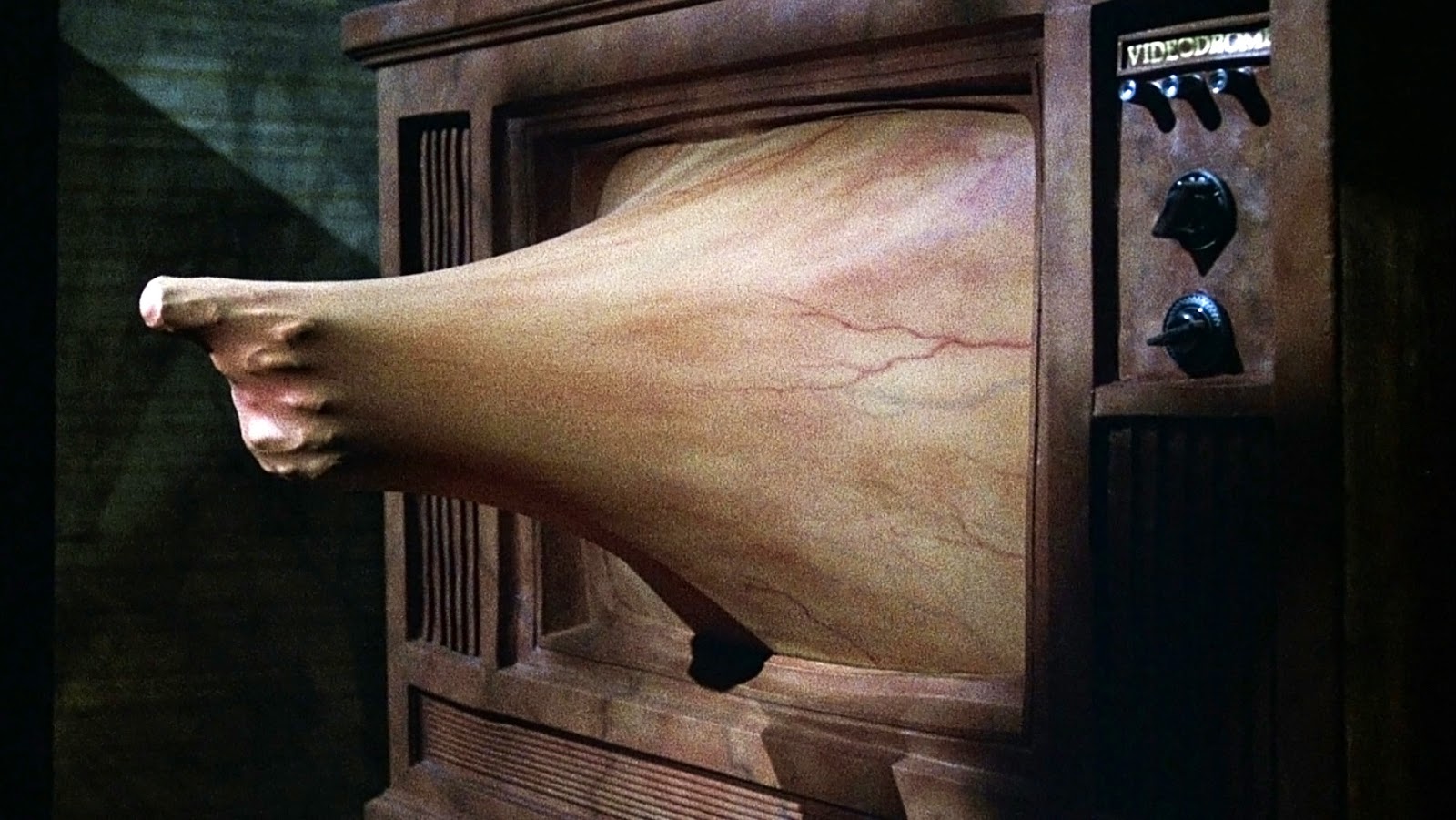
in the movie Videodrome, an eyeglass corporation that serves as a front for an arms manufacturer for NATO creates a weapon which takes the form of video of an extreme BDSM porn - dubbed "videodrome". the extreme sexualized violence depicted in the film causes deep bodily effects on the person exposed to it, like a brain tumor, and also heavy delusions and hallucinations - eventually re-wiring their body by forcing it, quite literally, to take out their will, and then killing them. the subject in the film they expose it to, under the guise of a pirate transmission, is Max Renn (played by James Woods), the owner of a seedy tv channel, who the corporation is targeting to get him to show it on his network and broadcast it to the kind of seedy people who watch his channel and get them all to carry out their bidding.

Brian O'Blivion, a prominent academic researcher, fought to create a counter-attack to videodrome before succumbing to the tumor he gained from being exposed to it. his counter-attack was to embrace the form of videos and reframe it as a new extension of our own flesh, as a way of communicating the dangers of videodrome, in making thousands of videos, oftentimes many a day. towards the end of the movie, when Max finds out that he has been exposed to videodrome, he is ordered by Barry Convex, the president of the arms manufacturer that makes videodrome, with taking out Brian's daughter Bianca. Barry orders Max to do this by quite literally inserting a fleshy videotape into a slit that has formed in Max's stomach. Max also is given a flesh gun from inside his stomach that fuses permanently with his hand. he uses this to, not under his own control, kill the heads of his network. Max then tries to kill Bianca but she understands deeply how videodrome works and manages to catch him before he does and reprogram him, again by pulling out the old videotape from his stomach and inserting a new one. he repeats this new phrase dictated by her: "I am the video word made flesh. death to videodrome. long live the new flesh."

this "new flesh" is as another way of looking at digital devices as extension of our bodies - and embracing them as body parts we exercise full autonomy over. because if we don't, we can easily fall under the order of strong, powerful cultural programming that favors the aims of corporate ideology and the military-industrial complex.


this is a very real and very intense battleground happening right now, in 2014, and i think it might be most easily illustrated by gamergate.

just compare the extreme violence of videodrome's BDSM porn to a hyper-violent FPS - the violence serves as particularly strong and powerful physical current for ideological indoctrination from larger forces to enlist their ultimately disposable subjects. and so we have disillusioned, small-time males pushed into carrying out acts of violence against counter-contingents which represent the most serious opposition against all this ideology - in the case of games, usually women.

i don't think we understand just how powerful videogames are- but the military does. the military and arms manufactures relationship with the triple-A industry has been increasingly documented. the tactile bodily effects and feedback of games make them a particularly effective indoctrination tool. even in tech, Facebook understands the power of a new technology like VR when they bought Oculus Rift and that it benefits them to be in control of technology so powerful.

the problem with fighting back against the tide of all this powerful cultural programming is we're often bad at envisioning and embracing this new flesh as a tool of progress amidst these vast corporate structures colonizing the internet. in his movie A Pervert's Guide to Ideology, Slavoj Zizek looks at the many apocalypse scenarios increasingly saturating popular media of the last ten years and asks: why is it so much easier for us to envision in the cultural consciousness a total apocalyptic collapse of society than it is to imagine a fairly minor-shift in our ways of understanding and constructing the reality of our situation?

the answer is that is the logical endpoint of the ideological path we're following now. and there is something intensely painful about, in the midst of this, realizing our own bodily autonomy, and our ability to make even a subtle a shift in our understanding and construction of reality. it's a struggle, and it involves experiencing a lot of pain.


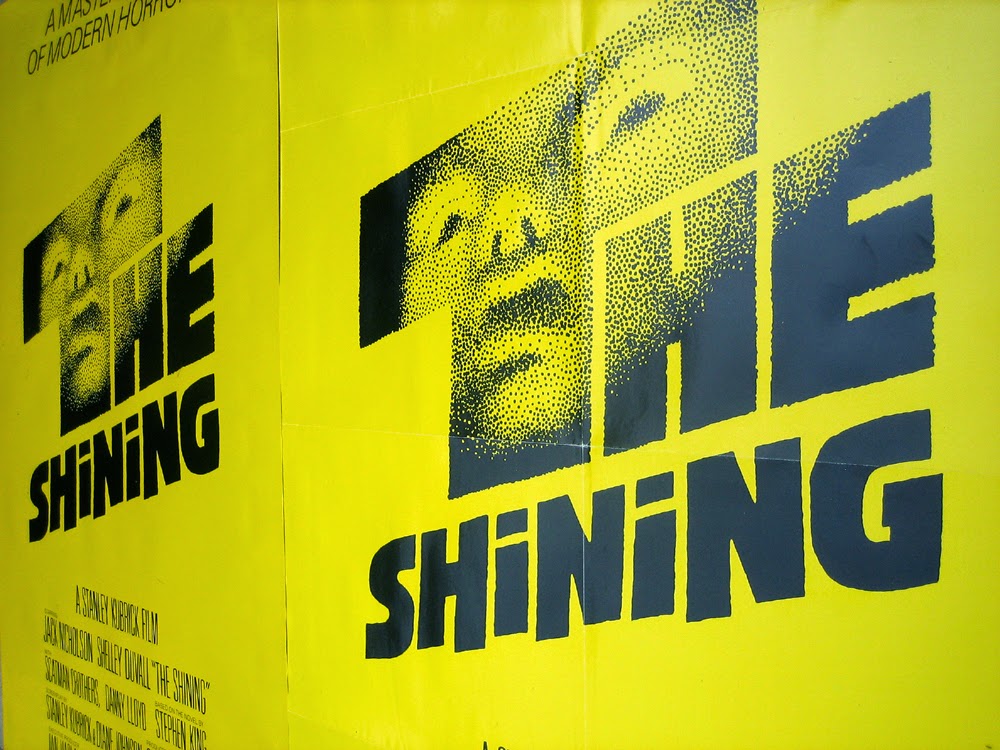
i'll do another one for you. i used to hate Stanley Kubrick's movies. i hated The Shining. i thought it was really cold, and alien, and manipulative. it all seemed like to come from this really cynical masculine perspective. i felt upset and used after watching the movie, and i didn't know why. it was very painful for me.

then after reading some deeper analysis, i started to see a voice come out of that movie. the things i had originally observed, instead of misreadings that went against against the surface narrative of the film like i had originally assumed, were actually intended readings. that source of pain became a window into something deeper. it lingered much more than any other films which went for shock value that i saw. and then i saw that it has a philosophy, it functions as a critique of ideology - just like Videodrome. Jack, the father, is never ever meant to be anything less than terrifying in the film, in contrast to the book. the film is a punishing critique of, among other things, the nuclear family structure, and white male imperialism. i think i understood this at some intuitive level, but wouldn't have been able to conceptualize that a horror film like this has that level of depth, because it usually never does.

this way of looking at media - with a deeply critical eye, against the grain of the surface narrative, is one that takes most people tremendous effort to learn and recognize as valid. corporate ideology implanted into media forces us to want to identify with our characters as a way of building a strong (but pre-defined) relationship with them in order to help us feel better about ourselves. getting past the role of media to help you feel better about yourself, and understanding that a piece of media is much more effective when looked at with an intensely critical eye, is tremendously painful to do. we see our natural state as one without ideology, and thus stuff that upends our natural state is seen as ideological. misogynistic gamers see feminism or LGBT rights as an ideology being enforced on them, rather than a critique of an ideology they implicitly, unthinkingly accept as valid.

once you are able to see the ideology underlying the need for escape and comfort, it opens you up to everything else. once, as Zizek in The Pervert's Guide To Ideology says of the movie They Live, you put on the sunglasses and see the true ideology underlying everything, you're not able to go back to normal life again. once i really looked at The Shining, the gears started turn in my brain. and i felt my capacity to understand increasing. but this involved confronting and dealing with pain - that involved willingly putting on the sunglasses, unafraid of what i might see through them.

game culture is so thoroughly built around identification with your character avatar that seriously challenging surface reading comes off as a direct antithesis to the conventional wisdom that exists within it. and that's not to say that big budget games haven't tried (and failed) to muddy these waters ala Bioshock Infinite or Spec Ops: The Line. but they failed in part because of a large part of the ideology of corporate game design is that players are never allowed to feel serious pain for more than the shortest period of time. and i don't mean pain to your character avatar, but pain to you, through design ideas which challenge your assumptions or your patience or your perspectives. often people approach games as some sort of sacred escape space defined by a complete lack of ideology. the almost spiritual, religious fervor that gamers approach games with makes it an excellent breeding ground for intense ideological indoctrination. this isn't rigidly and aggressively applied, but one that is seen as natural and normal state of games to occupy. but that level of deep, almost spiritual comfort games provide make it even easier to actively ignore how strongly constructed that idea of 'enjoyment' is in the first place. it also makes that much harder to wage any kind of serious, sustained counter-current against it.

while most media tends to flatten and flop on the ground upon further analysis, films like Videodrome or The Shining continue to just unfold like an infinitely-layered flower and have a life far after their making. and that's because The Shining or Videodrome embrace their form. they embrace the plasticity of it. they love their images, and their symbols. they love every detail and shot composition. they know their experiences are transparently not real in the pure factual sense (whatever that means, really), that therefore makes them much more real than equally-constructed depictions of "realism" in media, particularly in serious television of the last ten years. they instead, embrace the ideology of media. they embrace the new flesh. "death to videodrome!" they knowingly assert.


so does David Lynch. this simple but effective image is from his film Inland Empire. both the color red and lamps are continually used throughout his work - in this case the red lamp stands like an oracle that shines light into a violent memory. broken down into a series of fundamental symbols and constructions, his work re-examines deeply troubled psychological landscapes; and the deeper, more fundamental forces that flow through all things and communicate much more about who we and how we operate are at a much deeper and more intuitive level. his films, like Kubrick's and Cronenberg's, embrace a highly fabricated world as a channel to something deeper.

the point being that this realm of innovation for innovations sake, of the boy genius, ultimately aims for further entrenchment into existing ideologies. if we hope to win this war, we need to jump out of that realm and into the one of a spiritual healer or oracle. we need to jump out of the brain and into the body, to the larger picture. we need to not be afraid to feel pain. we need to look at media with a more critical, but also empathetic eye. we need to put on the sunglasses and not be afraid of what we might see through them.

because when we don't - not only is the end result co-option and re-entrenchment, but the end result is violence against those who openly resist this ideology, both in the metaphorical and literal sense - because the end result of adopting patriarchal and colonialist worldviews is always violence acted out on the bodies of the marginalized and powerless.

Sunday, December 29, 2013

2013: my year

in 2013 i did 3 things i'm particularly proud of:

1. Problem Attic. i'd never done a real, honest-to-god project i felt proud of. finishing this lifted that weight off me. it also confirmed a lot of things i already knew. there were a lot of things that hurt me in the past year, and a lot of drama that caused ripples and split a lot of people i've been around apart. the time when i finished the initial version of PA felt like the epicenter of all of it. it's been really hard for me to deal with that feeling, like you have something you're trying so desperately to say but you're being ignored and swept under the rug by everyone around you because you're not as loud as them.

all this led me to feeling suicidal for maybe the first real time in my life. i guess the price you pay for doing things your way is feeling increasingly alienated from people around you. i spent several months being upset that many people i knew didn't even seem to want to go near my game, let alone entertain the idea that there might be something more there. the IndieCade rejection form was another blow, especially when a couple judges assumed i made the artistic choices i did in the game because i was inept. i'm also preparing for the inevitable disinterest from the IGF. i'll probably submit it to the Experimental Gameplay Workshop at GDC next year, if only because it's free, but i'm not hoping for much. and then i'll probably call the whole "attempting to get exposure for it" quits.

i've felt increasingly like everyone i know thinks i'm crazy and self-absorbed for harping on this game so much and just wants me to give it a rest. but i'm a stubborn person, and that deep stubbornness is what made that game, and is what motivates in general me to keep going and doing what i do. so that's what's i'm going to do.

i'm very proud to have made this game, and i think it's probably one of those things that will gain in reputation over time. i felt really overjoyed to see that there are some people (people i don't know at all, too!) who feel the same way. it makes me feel like i'm not so crazy for believing this after all. my dream is still to make it as an electronic musician, but maybe i'll keep trying to give this games thing more chances.

2. the three extended tracks i did on the MirrorMoon EP OST. i've struggled a lot with music for many years, and these have felt like by far the most cohesive things i've done in recent years. though if you want to give me money, you should do so on my bandcamp.

3. the two talks i gave: Re: Fuck Videogames and The Abstract And The Feminine. the former is a response to a bunch of different things going on in games around 2013, and i think more people need to read it if they can deal with eye-fucking and a few typos i'm too lazy to fix. the latter talks about a lot of issues surrounding gender (gender and art in particular) that a lot of people seem to ignore, so i think it's important to check out.

i'm not really a natural-born speaker and i still have a lot of dysphoria about my voice, so speaking at both conferences was a real challenge. at No Show in Boston, where i gave Re: Fuck Videogames, Courtney Stanton (the organizer) was nice enough to cover my flight and her and her husband Darius Kazemi were gracious hosts for someone like me who otherwise never would've been able to afford flying out to the east coast. unfortunately for the talk itself, i wrote everything in my talk out in article format, which makes for better reading than it did saying out loud. aside from that, i think No Show was an excellent and well run conference and i may attempt to submit a talk there next year .

my QGCon talk went a lot more smoothly, and i think i was able to convey all the thoughts i wanted to in the time allotted. i hope it came off for the people watching it. the conference itself i was happy to see exist, especially really close by, and meet some new faces. there were also several really good talks! but it also felt a little more jumbled and unfocused around several different ideas of what different people thought of as "queer", and some of the talks were basically just boring student dissertations (including a talk about Japanese representation of queer people in games that really bothered me and some other people). also, i hope they fix the audio on the stream next time around so people can actually hear most of the talks!

and of course, GDC and IndieCade were in 2013, both of which i have the benefit of being close to. both were, in themselves, a whirlwind of interesting people and experiences (IndieCade moreso than GDC), even if i feel less than enthusiastic about their overall aims as events, to put it lightly.


other notable things:

- i'm still broke as hell. if anyone likes my work and wants to give me money or help me find gigs doing music for games or whatever else, email or paypal me at liz dot ryerson at gmail or buy my stuff on bandcamp.

- you should play A.L.T., which is the best Doom mod i've ever played. also read my article about it on Unwinnable if you need convincing.

- a few articles i wrote on this blog ended up becoming pretty popular or whatever. i still like this one called "why should i love them?" the most.

- SCRAPS is an album of a lot of old kinda-embarrassing stuff of mine hopefully made less embarrassing by the super cryptic format

- i did the music and sound design for Crypt Worlds and Triad, which was fun.

- i got interviewed in RPS, which was pretty neat.

- i do plan on finishing my Doom videos eventually, but they're not a priority.

- speaking of that, apparently people kinda like it when you pretend to talk about whatever big current AAA game, even if what you're saying is not related at all.

- i wrote a couple more Wolfenstein 3d level design articles early this year, for anyone who might have missed them.

- i made Responsibilities w/Andi McClure at the very end of last year but you should still play it!

- i finally updated my website (ellaguro.com), which is still very much a WIP. i'm fond of the icons.

- i'm posting assorted other bits (like the glitch art stuff i've been doing the past couple days) on my tumblr, ellaguro.tumblr.com

Monday, November 18, 2013

beyond "indie": a reprise

some two and a half years ago, Anna Anthropy wrote a post (and gave a micro-talk at GDC) titled "beyond indie". in it, she says:

"the indie label doesn’t contribute anything to the discussion except a needless sense of distance: calling a game an indie game or an author an indie developer just enforces the illusion that it’s an exclusive club, an inner circle to which most people aren’t admitted.

so my challenge to all of us is to stop thinking and talking in terms of indie games and indie developers, to get beyond the idea of an indie scene, to center the discussion on GAMES made by PEOPLE because there are going to be a whole lot more people making a whole lot more games and the indie label has become a moiety — a distinction we don’t need to make in an era where there’s no distinction between who can make videogames and who can’t."


there's still a lot of truth to Anna's words, but the usage of the term has also changed somewhat in the past couple years. the idea of "indie" implying a small handful of games made by an inner circle certainly very much applies to larger cultural representations like Indie Game: The Movie, or how a lot of the community around the IGF or IndieCade functions, but the label itself has also gained traction outside of those venues as a marketing term. most major games press has designated "indie" coverage now, and several "indie" games have gone on to be very successful in venues like Steam or The Humble Store. it's also the standard line parroted in the games press about next-gen consoles that Sony is "working with indies" in order to inject lifeblood into their current products, the PS4 and the Vita.

while the "indie" moniker has often been the subject of a lot of mockery (one example being the "Optimistic Indie" meme from 2011), it only seems to have gained greatly in usage and popularity since then. "indie games" now basically encompass anything and everything that isn't games made as part of the AAA development cycle. the popularity of things like Minecraft or Indie Game: The Movie means it's a moniker newer game developers readily desire to identify with because they want to be part of some scrappy cultural vanguard, either commercially or artistically (or both). but this also means that "indie" has become most readily identified with commercially successful developers working outside the AAA system, rather than the massive swath of interesting new games that have also been labeled "indie" but are seen as only as curiosities or failed experiments when evaluated on the terms of success dictated by the most culturally visible ones.

so while "indie" is still a derogatory term for a lot of self-identified "gamers" (search for "shitty indie game" on any major gaming website forum if you don't believe me), it's still very much growing as an established part of the industry. as if adding a nail in the coffin, a Sony spokesperson just this past week declared that "the Indie revolution is over" because Sony is now beginning to do what it needs to to adjust its old business models in order to more readily encompass indies as a viable part of the industry. Sony, of course, wouldn't have done this if they didn't see the writing on the wall. the industry has seen the success of "indie", in the midst of its own creative and financial stagnation, and is now readily attempting to co-opt it and pull it back into itself so that it can keep its machinery running.

but if the "indie revolution is over", what has been its lasting impact? has it been merely a way to inject lifeblood back into the industry by making smaller games more commercially viable, as Sony is trying to frame it? what about the legacy of the kinds of games that often appear on places like freeindiegam.es or forest ambassador? will they fall even further under the radar and have even less visibility once the industry fully co-opts "indie"?

i don't really know the answer to these questions. there at least seems to be more movement towards pushing beyond the idea of "indie" lately: there's Different Games, a conference run at NYU, that focuses on recognizing what we might think of as "unconventional" games, both digital and non-digital. as a name, i'm fond of "different games", if only as a meaningful but unspecific way to distinguish them from what normally gets labeled as a game, but it's lack of specificity means it's not particularly useful to be adapted as a widespread term. there's also the label "queer games", which was adapted to mean many different things by many of the speakers i saw at QGCon in Berkeley this past month. but "queer" obviously comes with a lot of baggage and implications as well. whatever the case, "indie" has proven itself to be an increasingly oppressive label that needs to be dropped.

the videogame industry is financially unstable and filled with deplorable labor practices and highly retrogressive values. becoming subsumed into the industry doesn't seem wise for either ideological or long-term financial reasons. i suggest we rescue what's worthwhile and get the hell out before the ship crashes and establish ourselves somewhere else. there are vast territories of the human experience that games can speak to, but these are rapidly narrowing with the widespread adaption of "indie" and all the implications that come with it. if we're at all concerned about the longevity of any of things done by game developers outside of the AAA system in the past five or so years, i believe we must drop any and all remaining identification with the label "indie" as soon as possible.

Friday, October 11, 2013

Fuck Festivals


fuck festivals.

i say this after having a wonderful time at IndieCade last week, and having just submitted my game Problem Attic to the IGF a few days ago.

the expectation placed on any so-called "indie game" to distinguish itself from the pack is much, much higher now. this might seem like a good thing, right? there are a lot more games now, so the stakes should be higher - and the games should be better, right? it, of course, depends on how you define "better". but this expectation has little to do with artistic or creative ambition and a lot to do with how professional-looking the game is. the end goal the forwarding of these games serves is to make "smaller games" become a new, viable, sustainable part of the games industry. everyone knows that Minecraft/Humble Bundle make tons of money, so a lot of people are pouring a lot of resources into getting in on that money.

this is a pretty violent shift from even five or six years ago, when a game like Passage was praised for being a unique achievement in game storytelling - where it was seen as a wildly left-field part of a new artistic vanguard. now it's becoming more apparent that a game like Passage was extremely lucky to benefit from there not being much else around to diminish it. now we can also see more clearly how conservative of the narrative of that game is in many ways - about a man and a woman and compromises they make, and how cliched the ideas behind it have become. now we can see how many games tried to be as artistically ambitious and less essentialist (i'm thinking of something like increpare's "Home") but never got nearly as much attention. now it would just look like a little experiment, one of many out there. it might get some coverage on a few indie gaming sites or get posted on freeindiegam.es and then that would be it. the conversation wouldn't sustain itself because there'd be something new to replace it in a week or less.

yes, it's easier to make a game than ever. the tools are much more accessible than they ever were before. and no, i'm not a person who believes that everyone making games (or art in general) is in any way bad at all. it's a wonderful thing, especially for the legions of the population who would otherwise be intimidated away from even attempting to try to make a game.

yet it's also hard to know in what spaces those games will be appropriately recognized and respected. things like the IGF and IndieCade might seem to be those spaces, but actually serve well those who have the ability to engage in a sustained PR to promote their games. this obviously benefits people with more resources and connections, who are almost universally not the type of people who would normally be scared away from making games. this is no secret. these festivals exist as a way to inject lifeblood into the games industry, or to legitimize games in the eyes of other industries like the film industry, not to subvert them.

festivals are supposed to be a bastion for new, ambitious developers to bring their game to a wider audience. but are festivals really developer friendly at all? for most developers, it's 95 dollars for the small hope that your game will reach a larger audience. except that it's more or less impossible for your game to be nominated unless you've waged an extended PR campaign for your game or are already a well-known developer. even for those who get in, they're expected to fly out to a conference and stay there (a flight which may or may not be paid for, other accommodations and food/drinks which almost certainly won't) and stand in front of a screen in a crowded expo floor for hours on end as people while people stumble their way through their game. this might be an acceptable sacrifice if there was just one festival - but there are many (the IGF being still the biggest) and there are a great number of games being exhibited at each of these festivals. each game is like a little tidbit, a little unit of ideas or concepts to be gorged on and eventually become absorbed into the industry. and so festival settings are fundamentally not served at all for slower or longer games - and particularly for text-based games. we don't value what these games may or may not have to offer. the nuances get glossed over because of the setting. we gorge on each one rapidly and leave. this is how we've been taught to treat videogames.

and personally, as someone who's designed a couple deliberately abstract games, there's nothing that sounds more like agony to me than being expected to explain and justify my game to any random person who walks by and plays it for five minutes. the Steam deal promised to developers nominated for last year's IGF was certainly a good thing, but that's only one festival of many - and a lot of the developers lucky enough to have the kind of PR clout to get in with the judges are also probably lucky enough to get on Steam without needing a nomination.

i admit it. some of these are my own realizations after designing a game (the aforementioned Problem Attic) that was in many ways unique and artistically ambitious, but i also recognized would not in any way be "festival-friendly". in itself, it might seem like a ridiculous idea that an artistically ambitious game wouldn't be "festival-friendly" - but in fact it makes perfect sense. festival jurors tend to self-consciously cherry-pick and reward the things with the most buzz. why? in order to make games more of a cultural event, for one - and to reward games which have managed to achieve some level of cultural penetration. there's also the practical matter of judges are going to naturally gravitate towards games or developers that they've already heard of, especially among the waves of games they haven't. and also to be what a good friend of mine calls a "photogenic indie" - something that's unique in maybe one or two ways but manages to overall have highly agreeable, unambiguous presentation. that's what people want to play, after all, right? they want the gloss, not the ugly, gross shit that shows its videogamey seams. that's what prominent members of the indie community or events like the IGF or IndieCade want to forward as examples of videogame expression.

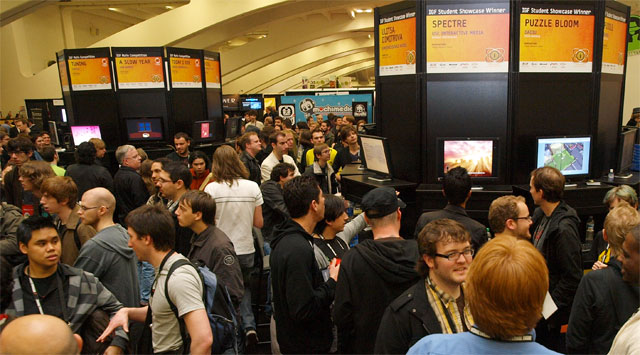
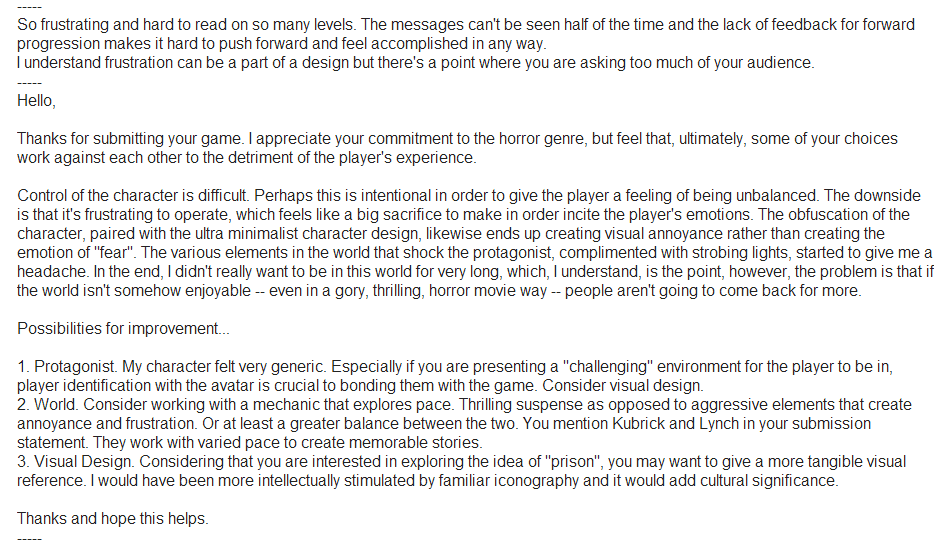
i will say that IndieCade was in several ways a lovely, forward-thinking event. it made an effort to have events like Night Games that the public could attend (though the lines were way too long for them), and also stayed lax about checking badges, allowing people to go to talks they might not be able to get into if they really wanted to. but as far as the festival goes, i've also received some of the most condescending feedback i've ever had. here are the two worst offenders (click to make it larger):


one judge says i'm "asking too much of my audience", the other seems to interpret my very intentional aesthetic choices as the fact that i must be clearly an inept and/or confused beginner (that i'm female likely plays into this), or else i clearly wouldn't have made a game like this.

i want to be clear that i don't want to make it out like i'm an exception, or that this is just about me. in many ways i'm maybe pretty lucky. i have enough friends to where if i kept waging a public PR campaign i might actually be able to get recognized in spite of how strange the things i make are, or how unpopular some of the sentiments i express in writing are. but that's not the point. the point is to aspire to have some kind of fair chance for people who can't, or won't engage in this. the point is to emphasize the people who are really, truly doing the most ambitious and crazy and unique things with videogames, and not the ones who are friends with the most judges, or who are making the most "photogenic" games. and i don't think it's possible for this to happen in any real way in the climate of these festivals.